Mones
Sorry, this article is only in Czech.
Sorry, this article is only in Czech.



It is no surprise to hear parents expressing doubts about a multi-age classroom, and questioning how children of different ages could work together harmoniously in the same environment, and if there are any benefits to this approach.
Read more
Tantrums and difficult transitions are two of the trickiest challenges parents face with toddlers. Even the most predictable schedules can sometimes lead to moments of overwhelm for your child, leaving you searching for ways to respond effectively. The good news is, with a little creativity and some gentle adjustments to your routine and environment, you can reduce these moments of frustration and help your toddler navigate them more smoothly.
Read more
Maria Montessori used to walk through the forests in India pulling leaves from trees to teach about their function and structure, digging in the soil to demonstrate the ubiquitousness of life, examining root systems and connecting them to academic ideas.
Read more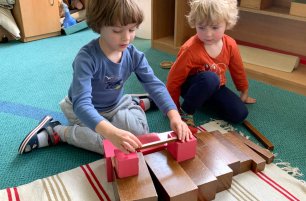
Have you ever noticed that your child enjoys singing the same song over and over again, or wants you to repeat the same story for what feels like a million times? Dr. Montessori highlighted the importance of sensitive periods in children, which are known as windows of opportunities for children to develop skills, including movement, language and most definitely, order. A child’s need for external order is present as early as childbirth and peaks in their second year, before fading at about the age of 5. This period of development helps a child to develop a connection between themselves and the world, process information and overcome challenges.
Read more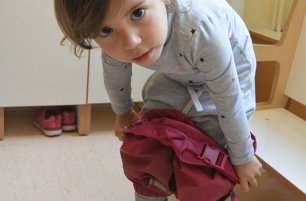
Patience and a positive attitude are key when helping children with dressing and undressing. This means staying engaged with your child, maintaining eye contact, but also being patient as they process the information and movements.
Read more