Mones
Sorry, this article is only in Czech.
Sorry, this article is only in Czech.


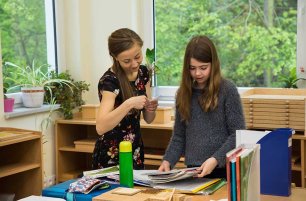
The fundamental aim of Montessori education is to help children become fully-fledged citizens of the world. How do we achieve something so monumental?
Read more
It is often said that “the family that eats together, stays together”. We would like to suggest taking it a step further – and encourage every family to cook together, too. In Montessori, we know that kitchen work provides a host of benefits to children, all the way from toddlers to adolescents; it is a part of the Practical Life curriculum as soon as children can walk! However, its advantages are in no way tied to the classroom and can be just as easily – if not more so – applied at home.
Read more
All you will need is 100g of soap, rubber molds, turmeric powder, lemon or orange essential oils, fresh lemon or orange, and a grater or zester.
Read more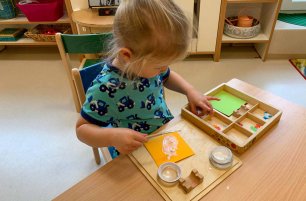
It has always been my priority to bring my kids up to be independent and curious and to treat them as my equal, if somewhat smaller in size; Montessori education therefore held a great appeal when it came to choosing a kindergarten. It has been six months since my daughter, who is just about to turn three, started attending IMSP and it is a joy and a privilege to observe how she thrives and develops.
Read more
The materials in the Sensorial area of the Montessori classroom are quite unique – they speak to the tactile observer in all of us. When you consider the way humans take in information, you realize how often we use more than one sense to explore. Maria Montessori’s work in the Sensorial environment was designed to take advantage of this tendency. Today, I will discuss the materials featured in the Children’s House classroom (ages 3-6).
Read more