Mones
Sorry, this article is only in Czech.
Sorry, this article is only in Czech.


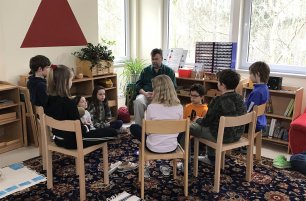
If you visit the Upper Elementary at IMSP on any school day in the late morning, you would hear a gentle bell ring at around 11:20. The students clean-up, and by 11:30, they gather on the classroom carpet and light a candle. A teacher sets a timer. At the sound of a bell, they begin their 5-minute awareness/mindfulness practice.
Read more
This week, our host Mariana Bečková chats with IMSP alumna Karolína Muchová. Born and raised in Prague, Karolína always knew she wanted to pursue her university education abroad. Press play to learn how IMSP prepared her for a rigorous high school experience and eventually, her choice to enroll at the University of Chicago in the United States. Between authentic one-on-one support and a personalized curriculum designed by IMSP teachers, Karolína shares how her experience with Montessori set her up for success as she spread her wings around the globe.
Read more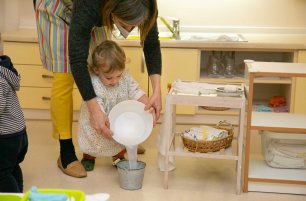
As teachers, we are often asked what special tips or tricks we use to get children to cooperate. Most often parents ask questions like “How can I get my child more interested in dressing and eating by themselves?”or “How can we make the mornings run more smoothly?” It can feel challenging when our patience is tested, but we must remember that children are learning to develop their own will and sense of obedience which is a natural process lasting until around six years of age.
Read more
Tantrums and difficult transitions are two of the trickiest challenges parents face with toddlers. Even the most predictable schedules can sometimes lead to moments of overwhelm for your child, leaving you searching for ways to respond effectively. The good news is, with a little creativity and some gentle adjustments to your routine and environment, you can reduce these moments of frustration and help your toddler navigate them more smoothly.
Read more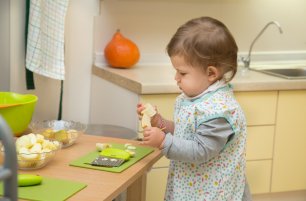
It is often said that “the family that eats together, stays together”. We would like to suggest taking it a step further – and encourage every family to cook together, too. In Montessori, we know that kitchen work provides a host of benefits to children, all the way from toddlers to adolescents; it is a part of the Practical Life curriculum as soon as children can walk! However, its advantages are in no way tied to the classroom and can be just as easily – if not more so – applied at home.
Read more