Menu

Video: Community Environment

The fundamental aim of Montessori education is to help children become fully-fledged citizens of the world. How do we achieve something so monumental?

One of the active ways we do this is by creating a classroom community, a microcosm of society that utilizes multi-age groups, peer-guided learning and the understanding that everyone in the community needs to take part in its functioning by cooperating with others and participating to the best of their ability. Through working together towards common goals, we develop independent, critical thinkers who understand their role and value within the group. Check out our video:

Want to learn more? Read our next article:
FUTURE OF EDUCATION

Další články

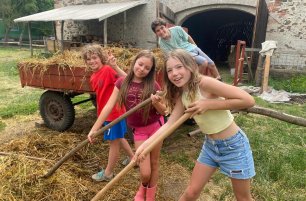
“Going Out” and Field Trips

An Essential Element of the Elementary Montessori Student Experience

Read more

IMSP Podcast: Meet alumnus Hubert Kobr

Join us as our host, Mariana Bečková, interviews Hubert Kobr on this week’s edition of the IMSP alumni podcast. Born in the Czech Republic, Hubert attended IMSP until beginning an IB program in a traditional Czech school. Discussing his education after Montessori, he shares how IMSP’s English-language curriculum prepared him to take on such a rigorous academic plan.

Read more

Staff Interview: Greg McCracken

What is a motto that you live by?  When I was young, my dad often reminded me: “Always do your best.” In the same way, what I often try to keep in mind is "Do what you can, where you are, with what you have." 

Read more

Learning Mathematics in our Primary Classrooms

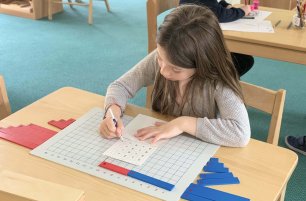
Maria Montessori often stated that not only does every human being have an innate drive to understand the environment around them, we all also naturally have what she called a “Mathematical Mind”. In the Montessori classroom, mathematical learning begins through indirect preparation long before a child is ever introduced to any Math materials.

Read more

Montessori Sensorial Materials Lead to Sensory Awareness

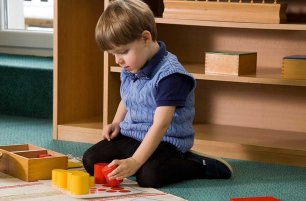
The materials in the Sensorial area of the Montessori classroom are quite unique – they speak to the tactile observer in all of us. When you consider the way humans take in information, you realize how often we use more than one sense to explore. Maria Montessori’s work in the Sensorial environment was designed to take advantage of this tendency. Today, I will discuss the materials featured in the Children’s House classroom (ages 3-6). 

Read more
29.05.2018
Interactive Open House Register for
Baby & Me
Register for
Toddler & Me
Enroll your child
at IMSP
Virtual tour