Mones
Sorry, this article is only in Czech.
Sorry, this article is only in Czech.


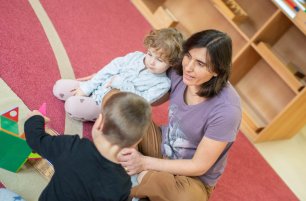
Veronika wanted to be a teacher from her childhood. Despite this she was graduated from Legal Studies at the Charles University. After having her first child, she fell in love with Montessori and her dream job came true. She devoted her career path to being a Primary Montessori teacher.
Read more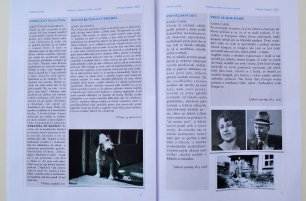
Introducing IMSP’s LIDOVÉ NOVINY, a Czech-language newspaper written, edited, and assembled by our Upper Elementary students. This project was inspired by renowned Czech writer Karel Čapek. Čapek, best known for inventing the word „robot“, was beloved for his versatile and multi-genre pieces. Bouncing between modern fairytales, short stories, travel-logs, and biographical work, Čapek also had a particular affinity for the feuilleton, a short newspaper essay designed, not only to inform the reader, but to amuse them as well.
Read more
This week, our host Mariana Bečková chats with IMSP alumna Karolína Muchová. Born and raised in Prague, Karolína always knew she wanted to pursue her university education abroad. Press play to learn how IMSP prepared her for a rigorous high school experience and eventually, her choice to enroll at the University of Chicago in the United States. Between authentic one-on-one support and a personalized curriculum designed by IMSP teachers, Karolína shares how her experience with Montessori set her up for success as she spread her wings around the globe.
Read more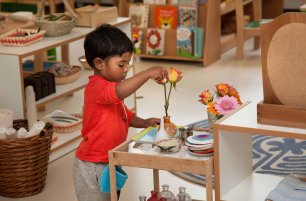
Radka Dohnalova, a parent of three IMSP children, has been researching the future of education in this world. She has summarized her findings in the article below, which was also recently published. Radka wanted to share the results with the IMSP community when her research revealed how Montessori education aligns with where the future of education is heading.
Read more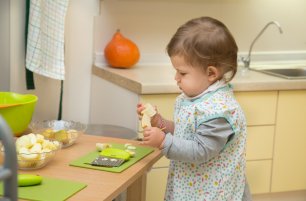
It is often said that “the family that eats together, stays together”. We would like to suggest taking it a step further – and encourage every family to cook together, too. In Montessori, we know that kitchen work provides a host of benefits to children, all the way from toddlers to adolescents; it is a part of the Practical Life curriculum as soon as children can walk! However, its advantages are in no way tied to the classroom and can be just as easily – if not more so – applied at home.
Read more